What Happens in the Dark: Deep Sleep's Cellular Repair Machinery Revealed
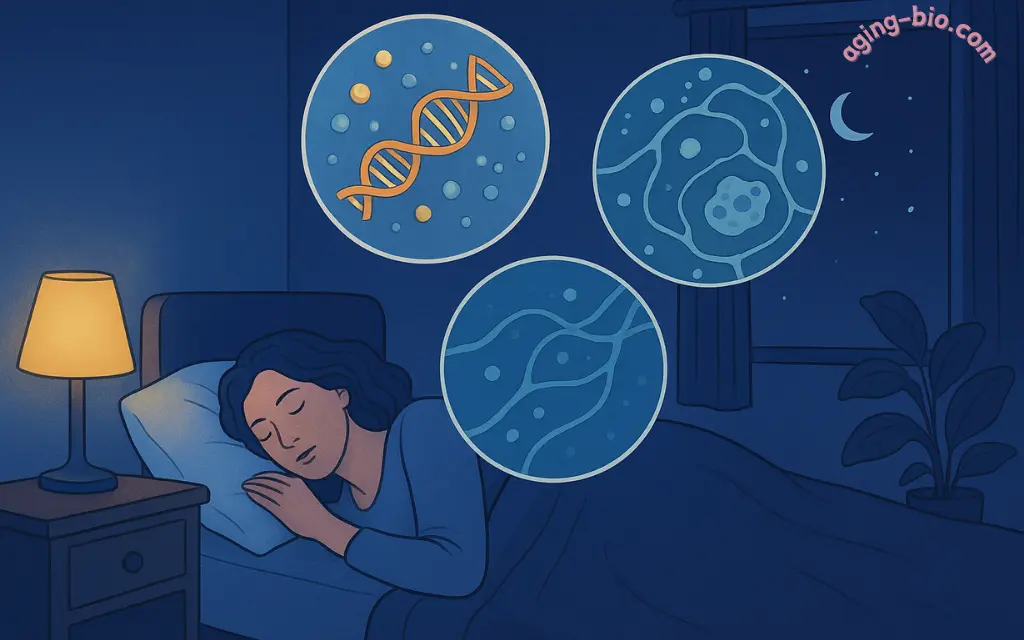
The moment your brain slips into slow-wave sleep, something extraordinary begins. Not the passive rest we imagine, but an intricate cellular renovation that rivals any precision engineering project. Your neurons literally shrink, creating space for cerebrospinal fluid to surge through brain tissue like a midnight cleaning crew. Mitochondria—the cellular power plants that spent the day generating energy and accumulating damage—now shift into repair mode, while specialized enzymes scan your DNA for the day's accumulated breaks and mutations.
This isn't gentle restoration. It's cellular triage conducted in the dark, where the difference between efficient repair and accumulated damage determines whether you wake up biologically younger or older than when you went to sleep.
The Architecture of Deep Sleep: Where Repair Begins
Deep sleep—technically slow-wave sleep (SWS)—represents your brain's most synchronized state. When electroencephalogram readings show those characteristic delta waves (0.5-4 Hz), your cortex isn't just resting; it's orchestrating a complex molecular program that can't happen during waking hours.
The Delta Wave Symphony
These slow oscillations aren't random electrical noise. They're the conductor's baton that coordinates cellular repair across your entire brain. Research from the University of Rochester reveals that during delta wave activity, neurons undergo cyclical changes in cell volume that create the space necessary for glymphatic clearance—the brain's overnight waste removal system.
The timing is precise: during deep sleep, the space between brain cells increases by approximately 60%, allowing cerebrospinal fluid to wash through brain tissue more efficiently than during waking hours. This creates the physical conditions necessary for the glymphatic system's waste clearance functions.
Melatonin's Molecular Switch
As darkness falls, your pineal gland begins releasing melatonin in precisely timed pulses. But melatonin isn't just a sleep hormone—it's a molecular switch that activates the cellular repair program. Dr. Rüdiger Hardeland's research demonstrates that melatonin acts as a context-dependent regulator, suppressing daytime inflammatory pathways while activating nighttime repair mechanisms.
The mechanism involves SIRT1 (sirtuin-1), a protein that serves as a cellular sensor for energy status and DNA damage. During deep sleep, melatonin enhances SIRT1 activity, which then activates downstream repair pathways including DNA repair enzymes, mitochondrial biogenesis factors, and autophagy regulators. This melatonin-SIRT1 axis represents one of the most important anti-aging pathways activated during sleep.
Mitochondrial Repair: Power Plant Maintenance
Your mitochondria work tirelessly during waking hours, generating ATP while accumulating oxidative damage. By day's end, these cellular engines are running inefficiently, with damaged proteins and mutated mitochondrial DNA compromising their function. Deep sleep triggers a sophisticated repair program that addresses this damage systematically.
Mitophagy: Selective Mitochondrial Recycling
The process begins with mitophagy—a targeted form of autophagy that identifies and removes damaged mitochondria. Dr. David Sinclair's team at Harvard discovered that during deep sleep, cells activate PINK1/Parkin signaling, a pathway that marks damaged mitochondria for destruction while preserving healthy ones.
Here's how it works: damaged mitochondria accumulate PINK1 on their outer membranes, which then recruits Parkin proteins. Parkin ubiquitinates damaged mitochondrial proteins, creating molecular flags that autophagosomes recognize and engulf. The damaged mitochondria are then delivered to lysosomes for complete degradation, while healthy mitochondria undergo fission and fusion cycles that maintain their integrity.
Mitochondrial Biogenesis: Building New Power Plants
As damaged mitochondria are removed, deep sleep simultaneously triggers mitochondrial biogenesis—the creation of new, healthy mitochondria. This process involves PGC-1α (peroxisome proliferator-activated receptor gamma coactivator 1-alpha), a master regulator that coordinates the expression of hundreds of genes involved in mitochondrial formation.
Sleep and circadian rhythms influence cellular NAD+ levels, which provide important substrates for various cellular repair processes including mitochondrial function and gene regulation.
DNA Repair: Correcting the Daily Damage
Cells accumulate DNA lesions daily from UV radiation, oxidative stress, and normal metabolic activity. While many are repaired continuously, complex lesions benefit from the focused cellular resources available during deep sleep.
Homologous Recombination Repair
The most sophisticated DNA repair mechanism—homologous recombination—requires precise timing and cellular resources that are only available during deep sleep. This process fixes double-strand breaks, the most dangerous type of DNA damage, by using the undamaged sister chromatid as a template.
During deep sleep, cells have enhanced capacity for DNA repair processes. Research indicates that melatonin can enhance DNA repair capacity by affecting genes involved in DNA damage response pathways, while the quiet cellular state of sleep provides optimal conditions for these energy-intensive processes.
Base Excision Repair: Fixing Single-Base Damage
For smaller DNA lesions, cells employ base excision repair (BER) enzymes that scan DNA for damaged bases and replace them with correct ones. Research shows that base excision repair (BER) efficiency can be enhanced during sleep periods, with melatonin supporting DNA repair capacity through its regulatory effects on repair enzyme expression and cellular antioxidant systems.
Glymphatic Clearance: The Brain's Waste Management
Perhaps the most visually striking aspect of deep sleep is the glymphatic system—the brain's specialized waste clearance mechanism that operates only during sleep. This system, discovered by Dr. Maiken Nedergaard at the University of Rochester, represents a fundamental shift in our understanding of brain maintenance.
The Cerebrospinal Fluid Surge
During deep sleep, the space between brain cells increases by 60%, allowing cerebrospinal fluid to surge through brain tissue at unprecedented rates. This fluid carries away metabolic waste products including amyloid-beta peptides, tau proteins, and other neurotoxic compounds that accumulate during waking hours.
The mechanism involves aquaporin-4 channels, specialized water channels concentrated in astrocyte endfeet that surround blood vessels. During sleep, these channels polarize to facilitate rapid cerebrospinal fluid exchange, creating a washing action that clears waste products more efficiently than any artificial filtration system.
Amyloid-Beta Clearance Dynamics
Research indicates that the glymphatic system becomes more active during sleep, with enhanced clearance of metabolic waste products including amyloid-beta peptides. This process involves active transport mechanisms that are facilitated by the sleep state.
Autophagy: Cellular Housekeeping at Scale
While mitochondria undergo targeted repair, the rest of the cellular machinery engages in comprehensive autophagy—the process by which cells digest and recycle their own damaged components. This isn't random destruction, but a highly regulated program that identifies and removes specific cellular waste.
Macroautophagy: Large-Scale Recycling
During deep sleep, cells activate macroautophagy, forming double-membrane vesicles called autophagosomes that engulf damaged proteins, organelles, and other cellular debris. These autophagosomes then fuse with lysosomes, where acid hydrolases break down the contents into reusable building blocks.
The process is regulated by mTOR (mechanistic target of rapamycin), a cellular sensor that monitors nutrient availability and energy status. During deep sleep, mTOR activity decreases, removing the brake on autophagy and allowing cellular cleanup to proceed at maximum efficiency.
Chaperone-Mediated Autophagy: Precision Targeting
For specific proteins, cells employ chaperone-mediated autophagy (CMA), a highly selective process that identifies individual proteins for degradation. This process involves heat shock protein 70 (HSP70), which recognizes specific amino acid sequences on damaged proteins and delivers them to LAMP-2A receptors on lysosomes.
Research indicates that chaperone-mediated autophagy efficiency can be influenced by sleep quality, suggesting that optimizing sleep may support cellular protein quality control mechanisms.
The Circadian Clock: Timing Everything Perfectly
All these repair processes are orchestrated by your circadian clock—a molecular timekeeper that ensures each repair mechanism activates at precisely the right moment. This clock isn't just in your brain; every cell contains its own circadian oscillator that synchronizes with the master clock in your suprachiasmatic nucleus.
BMAL1-CLOCK Transcriptional Control
The core circadian machinery involves BMAL1 and CLOCK proteins, which form a transcriptional complex that regulates the expression of thousands of genes involved in cellular repair. During deep sleep, this complex activates genes encoding DNA repair enzymes, autophagy regulators, and mitochondrial biogenesis factors.
The timing is crucial: BMAL1 peaks during the early night, coinciding with the onset of deep sleep, then gradually declines toward morning. This creates a temporal program where different repair mechanisms activate in sequence, ensuring comprehensive cellular maintenance without interference.
NAD+ Cycling: The Metabolic Foundation
NAD+ levels follow a precise circadian rhythm, peaking during deep sleep and declining during waking hours. This cycling provides the metabolic foundation for all repair processes, as NAD+ serves as a cofactor for sirtuins, PARPs, and other repair enzymes.
Research shows that disrupting NAD+ cycling through poor sleep or circadian misalignment dramatically impairs cellular repair efficiency. Conversely, interventions that restore NAD+ rhythms—such as time-restricted eating or NMN supplementation—can enhance the effectiveness of sleep-based repair mechanisms.
Practical Implications: Optimizing Your Cellular Repair
Understanding these mechanisms transforms sleep from a passive necessity into an active intervention for cellular rejuvenation. The goal isn't just to sleep longer, but to optimize the specific conditions that maximize repair efficiency.
Deep Sleep Enhancement Protocol
Timing Precision: Your circadian clock determines when repair mechanisms activate. Going to bed even 2-3 hours later than usual can shift the timing of DNA repair and autophagy, reducing their effectiveness. Consistency matters more than perfection.
Temperature Optimization: Deep sleep stages are triggered by the natural drop in core body temperature that occurs in the evening. Supporting this drop through environmental cooling (65-68°F bedroom temperature) enhances the activation of repair mechanisms.
Light Management: Even brief exposure to blue light in the evening can suppress melatonin production and delay the activation of repair pathways. Complete darkness or red light exposure supports optimal cellular repair timing.
Advanced Interventions
NAD+ Support: Given NAD+'s central role in repair mechanisms, supporting NAD+ levels through NMN supplementation (500-1000mg morning dosing) or time-restricted eating can enhance the effectiveness of sleep-based repair.
Exercise Timing: Regular exercise improves deep sleep quality, but timing matters. Morning or afternoon exercise enhances nighttime repair mechanisms, while evening exercise can disrupt circadian timing and reduce repair efficiency.
Nutritional Support: Certain nutrients support specific repair mechanisms—magnesium for DNA repair enzymes, omega-3 fatty acids for mitochondrial membrane integrity, and polyphenols for autophagy regulation.
Measuring Your Repair Efficiency
The ultimate goal is to wake up with cells that are biologically younger than when you went to sleep. While we can't directly measure cellular repair in real-time, several biomarkers provide insight into repair efficiency.
Sleep Architecture Analysis
Advanced sleep tracking can measure deep sleep duration and quality—the periods when most cellular repair occurs. Target: 15-20% of total sleep time in deep sleep stages.
Morning Biomarkers
8-OHdG: A marker of oxidative DNA damage that may reflect cellular repair efficiency over time. Inflammatory markers: Levels that indicate overnight cellular recovery processes. Cognitive testing: Memory and processing assessments that may reflect effective brain maintenance during sleep.
Long-term Indicators
Epigenetic age: DNA methylation patterns that reflect biological aging rate. Inflammatory markers: CRP, IL-6, and TNF-alpha levels that indicate overnight inflammatory resolution. Cognitive testing: Memory and processing speed improvements reflecting effective brain repair.
The Future of Sleep-Based Anti-Aging
As our understanding of sleep's cellular mechanisms deepens, we're approaching an era where sleep optimization becomes precision medicine. Future interventions may include personalized sleep protocols based on genetic variants in repair enzymes, targeted supplements that enhance specific repair pathways, and even pharmaceutical interventions that amplify natural repair mechanisms.
The most exciting prospect isn't extending sleep duration—it's maximizing repair efficiency during the sleep we already get. Understanding that every night represents an opportunity for cellular rejuvenation transforms sleep from passive rest into active anti-aging intervention.
Your cells are working harder while you sleep than they do during your busiest day. The question isn't whether to optimize this process—it's how to ensure every night's cellular renovation builds a biologically younger you by morning.
https://aging-bio.com/search_index.en.json$MATCHES more matches