Gut Microbiota and Aging: New Research on DNA Repair and Inflammation
The bacteria living in your intestines might be influencing how fast you age. Among many factors that affect aging, your gut microbiota plays a surprisingly important role that scientists are just beginning to understand.
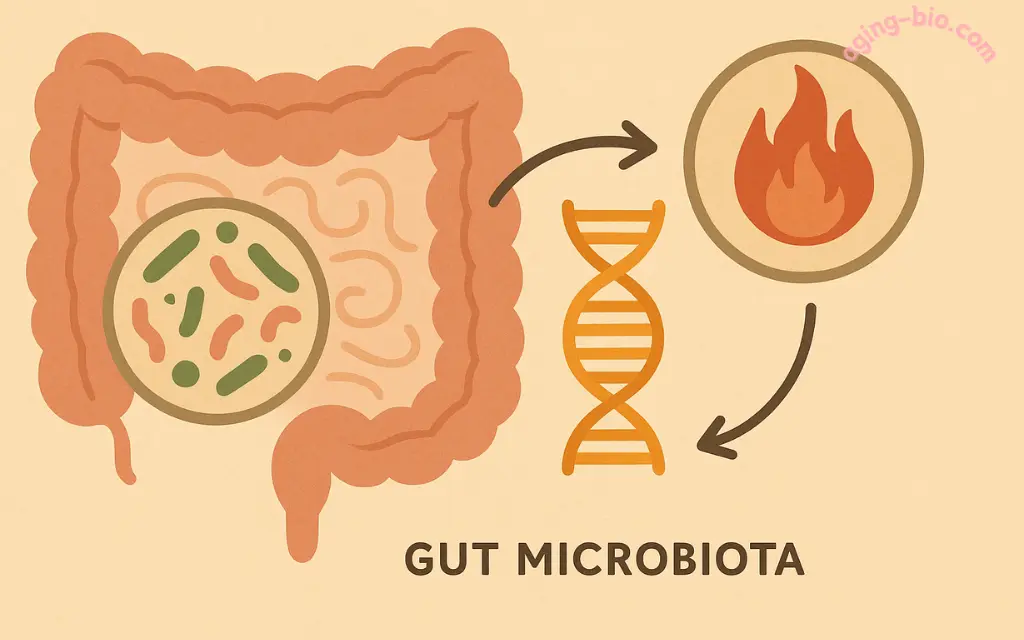
Recent research from Kiel University and Hebrew University has uncovered a new connection: gut bacteria-driven inflammation may accelerate the age-dependent decline in DNA damage repair, revealing how microbial changes could influence cellular aging processes.
The DNA Repair Connection
Every day, your DNA suffers thousands of damage events. Double-strand breaks—where both sides of the DNA helix snap—are particularly dangerous. When you're young, your cells fix these breaks relatively well, but repair efficiency declines with age.
The study found that age-related changes in gut bacteria composition contribute to chronic inflammation, termed "inflamm-aging." As mice reach 6 months of age (equivalent to human middle age), their intestinal microbiota shifts toward patterns associated with increased inflammatory responses, particularly elevated TNF-α and IL-1β cytokines produced by Kupffer cells (liver macrophages).
The research demonstrates that these inflammatory cytokines directly interfere with DNA double-strand break repair mechanisms. Rather than intrinsic cellular deficiencies in DNA repair machinery, the decline appears to be driven by the inflammatory tissue microenvironment created by age-related microbial dysbiosis.
The Antibiotic Experiments
Researchers tested this connection by treating 6-month-old mice with broad-spectrum antibiotics (vancomycin, imipenem, and neomycin) for two weeks. The treatment significantly reduced inflammatory cytokine expression (TNF-α, IL-1β, and RANTES) and restored DNA double-strand break repair efficiency to levels comparable to 1-month-old mice.
Studies with germ-free mice (raised without gut bacteria) showed these mice had markedly reduced cytokine expression and improved DNA damage resolution compared to conventional mice. MyD88-deficient mice (lacking key bacterial sensing pathways) also exhibited reduced inflammation and improved DNA repair, confirming that bacterial signaling through pattern recognition receptors drives the inflammatory response affecting DNA repair.
Gut-Brain Communication and Aging
Your gut contains millions of neurons that form what's often called the "enteric nervous system." This network communicates with your brain through various pathways, including the vagus nerve, and can influence inflammation throughout your body.
Research suggests that age-related changes in gut bacteria may contribute to chronic, low-grade inflammation—what scientists call "inflamm-aging." This inflammatory state may affect how cells prioritize their functions, potentially including DNA repair mechanisms.
Diet and Gut Bacteria Changes
The study found that feeding 3-month-old mice a high-fat diet for 3 weeks promoted gut bacteria changes associated with inflammation, leading to elevated TNF-α and IL-1β expression. These mice showed reduced DNA double-strand break repair efficiency similar to what's normally seen in 6-month-old mice. Importantly, this effect was reversed when mice received antibiotic treatment during the final 3 weeks of high-fat diet feeding.
This suggests that diet quality may influence aging processes partly through its effects on gut bacteria composition, though this is just one of many factors that affect how we age.
Immune System and Inflammation Effects
The study identified the specific inflammatory mechanism: age-related gut microbiota dysbiosis leads to increased TNF-α and IL-1β production by Kupffer cells through MyD88-dependent bacterial sensing pathways. These inflammatory cytokines interfere with HB-EGF (heparin-binding EGF-like growth factor) mediated DNA double-strand break repair, rather than affecting the core DNA repair machinery itself.
Studies suggest that reducing this inflammatory burden—whether through dietary changes, microbiota modulation, or other approaches—may help restore more optimal conditions for DNA repair. However, these findings are based on animal studies and require further validation.
What This Means for You Today
While this research is still in early stages, it suggests some practical considerations:
Understand inflammation basics—chronic, low-grade inflammation is associated with various age-related conditions, and gut bacteria may contribute to this process.
Consider overall health—factors like diet, exercise, and sleep affect both gut bacteria composition and inflammation levels.
Focus on established health practices—maintaining a balanced diet, regular exercise, and healthy weight remain the most evidence-based approaches to healthy aging.
Stay informed—as research progresses, more targeted approaches to managing gut bacteria and inflammation may become available.
Future Research Directions
Scientists are exploring several approaches based on this research:
- Mechanism refinement to understand how HB-EGF-mediated DNA repair is specifically inhibited by inflammatory cytokines
- Translational studies to determine if similar mechanisms occur in humans
- Dietary interventions to test whether calorie restriction or specific dietary patterns can reduce age-related inflammation and preserve DNA repair capacity
- Microbiome-targeted therapies including specific bacterial strains that may reduce inflammatory cytokine production
These approaches are still in early research phases and will require extensive testing before clinical application.
A Broader Perspective on Aging Research
This study adds to growing evidence that aging involves complex interactions between multiple body systems. The finding that gut bacteria-driven inflammation can accelerate the age-related decline in DNA repair efficiency provides a specific mechanism for how microbial dysbiosis contributes to cellular aging.
Understanding these connections may eventually contribute to more comprehensive approaches to healthy aging, alongside established factors like nutrition, exercise, and medical care. The research demonstrates that age-related DNA repair decline is not inevitable cellular deterioration, but rather a potentially modifiable process influenced by the inflammatory microenvironment created by gut microbiota changes.
The research continues to evolve, offering new insights into how different body systems communicate and influence aging processes.
https://aging-bio.com/search_index.en.json$MATCHES more matches