Senolytic Drugs: The Cellular Cleanup Crew That's Rewriting Aging
Imagine your body as a city where some buildings have become abandoned and toxic. These aren't just empty structures—they're actively spewing pollution that affects the entire neighborhood. This is essentially what happens with senescent cells, and scientists have discovered a way to send in a specialized cleanup crew.
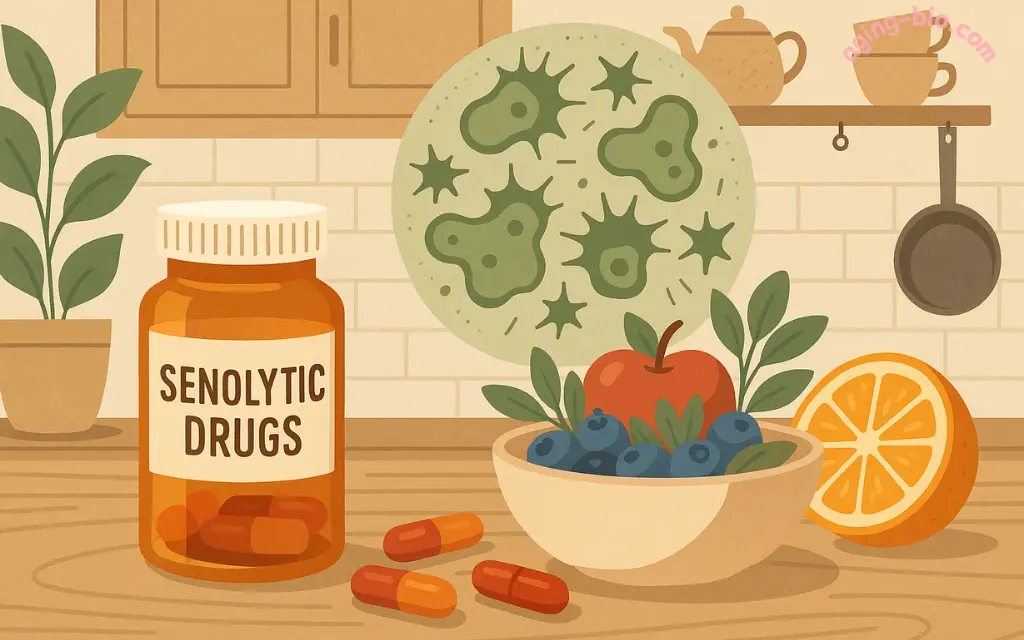
The Zombie Cells Living Among Us
Senescent cells are damaged cells that have stopped dividing but refuse to die. Instead, they linger in tissues like cellular zombies, pumping out inflammatory molecules through something called the Senescence-Associated Secretory Phenotype (SASP). This toxic cocktail includes cytokines, growth factors, and proteases that accelerate aging and contribute to everything from arthritis to Alzheimer's disease.
The breakthrough came when researchers realized these cells aren't just passive bystanders—they're active drivers of aging. More importantly, they discovered that senescent cells rely on specific anti-apoptotic pathways to stay alive, creating a vulnerability that could be exploited therapeutically.
How Senolytic Drugs Work: The Molecular Hit List
Senolytic drugs don't just kill any cell—they're precision assassins that target senescent cells through their unique survival mechanisms. These cells overexpress anti-apoptotic proteins like BCL-2, BCL-XL, and PI3K, which normally protect them from programmed cell death. Senolytics disable these pro-survival pathways, essentially removing the cellular armor that keeps senescent cells alive.
Think of it like cutting off a zombie's food supply. Once these protective pathways are disrupted, the senescent cells can no longer resist natural apoptosis signals and are eliminated through the body's normal cleanup processes.
The First Generation: Dasatinib and Quercetin
The original senolytic combination—dasatinib plus quercetin (D+Q)—was discovered somewhat accidentally. Dasatinib, a tyrosine kinase inhibitor used for leukemia, showed unexpected senolytic activity when combined with quercetin, a flavonoid found in apples and onions.
Clinical trials have shown promising early results. In a Phase 1 trial for diabetic kidney disease, 9 patients received 100mg dasatinib plus 1000mg quercetin daily for 3 days, which reduced senescent cell burden in adipose and skin tissues along with circulating SASP factors. Another Phase 1 trial in 14 patients with idiopathic pulmonary fibrosis used 100mg dasatinib plus 1250mg quercetin intermittently (3 days per week for 3 weeks), resulting in improved physical function measures like 6-minute walk distance. However, these studies are still early-stage with small participant numbers.
The beauty of this combination lies in its intermittent dosing schedule—patients receive treatment for just a few days, then the drugs are stopped. This reduces side effects while allowing the body time to clear the eliminated cells.
Natural Senolytics: The Plant-Based Arsenal
While pharmaceutical senolytics grab headlines, several natural compounds have emerged as promising alternatives with fewer side effects and better accessibility.
Fisetin stands out as a potent natural senolytic among flavonoids tested. Found in strawberries, apples, and persimmons, fisetin showed efficacy in mouse studies, reducing senescent cell markers among 10 different flavonoids tested. Multiple human trials are currently recruiting participants, including studies investigating fisetin's potential to improve skeletal health (NCT04313634, NCT04210986) and address frailty syndrome in elderly individuals (NCT03430037).
Quercetin, beyond its pharmaceutical pairing with dasatinib, works as a standalone senolytic. It's abundant in red wine, tea, and vegetables, making it perhaps the most accessible senolytic compound. However, its bioavailability remains a challenge, with most of the compound being rapidly metabolized.
Resveratrol, famous for its presence in red wine, has complex effects on cellular senescence. While it can activate SIRT1 and shows anti-aging properties in some contexts, research indicates it may actually induce senescence in certain cell types through DNA damage response pathways. Its effects appear highly dependent on cell type, dosage, and cellular context.
Piperlongumine, derived from long peppers, selectively targets senescent cells by disrupting oxidation resistance 1 (OXR1), a sensor of oxidative stress that regulates antioxidant enzyme expression. This leads to selective degradation of OXR1 in senescent cells through the ubiquitin-proteasome system, triggering apoptosis specifically in aged or damaged cells.
Clinical Reality Check: Where We Stand
The excitement around senolytics is tempered by the reality that most evidence comes from animal studies. Human trials are still in early phases, with small sample sizes and short durations. The phase I D+Q trial in diabetic kidney disease involved 9 patients, and while results showed reduced senescent cells in adipose and skin tissue, larger studies are needed.
Safety profiles vary significantly. Dasatinib carries known risks from its oncology use, including fluid retention and bleeding complications. Natural compounds like fisetin appear safer but lack long-term safety data at senolytic doses.
What's particularly intriguing is the intermittent dosing approach. Unlike most anti-aging interventions that require daily commitment, senolytics may only need periodic administration—perhaps quarterly or annually—to maintain benefits.
The Dark Side: When Senescent Cells Are Helpful
Here's where the story gets complicated. Senescent cells aren't always villains—they play crucial roles in wound healing, embryonic development, and tumor suppression. Complete elimination might interfere with these beneficial functions.
This creates a therapeutic dilemma: how do we selectively eliminate harmful senescent cells while preserving beneficial ones? Some researchers propose targeting specific senescence subtypes or using senomorphic drugs that suppress the harmful SASP without killing the cells entirely.
Practical Applications: What's Actually Available
For those interested in natural senolytics, the options are surprisingly accessible. Fisetin supplements are widely available, though achieving senolytic doses requires higher concentrations than typical dietary intake. Quercetin is even more accessible, found in many fruits and vegetables, though supplementation may be needed for therapeutic effects.
The key insight is timing and context. Senolytics appear most effective when senescent cell burden is high—during aging, after chemotherapy, or following significant tissue injury. This suggests they might work best as targeted interventions rather than general preventive measures.
Future Developments: What's Next
The field is rapidly evolving with several exciting directions:
Targeted delivery systems using nanoparticles or engineered exosomes could deliver senolytics directly to specific tissues, reducing systemic side effects.
Biomarker development will help identify who needs treatment and when, moving toward personalized senolytic therapy based on individual senescent cell burden and SASP profiles.
Combination approaches might pair intermittent senolytic treatments with lifestyle interventions like exercise and dietary modifications that naturally reduce senescent cell accumulation.
Refined dosing strategies are being developed to optimize the intermittent treatment schedules that have shown promise in early trials, potentially allowing for longer treatment-free periods between cycles.
Bottom Line
Senolytic drugs represent a paradigm shift in how we approach aging—not as an inevitable decline, but as a treatable condition driven by specific cellular processes. While we're still in the early days, the combination of pharmaceutical precision and natural accessibility makes this one of the most promising anti-aging interventions currently available.
The key is managing expectations. These aren't magic bullets, but rather sophisticated tools that, when used appropriately, could significantly improve healthspan. As clinical trials continue and natural compounds are better characterized, we're moving toward a future where cellular cleanup becomes as routine as dental cleaning.
For now, the most practical approach might be incorporating natural senolytics through diet and targeted supplementation, while keeping an eye on emerging clinical evidence. The zombie cells are real, and for the first time in history, we have weapons to fight them.
Disclaimer: This article is for educational and informational purposes only. It does not constitute medical advice, diagnosis, or treatment. Senolytic drugs are experimental therapies not approved for general use. Always consult qualified healthcare professionals for medical decisions and before considering any experimental treatments.
https://aging-bio.com/search_index.en.json$MATCHES more matches